Brewing Water Cooling
Advanced Ice Bank Silo Solutions for Energy-Efficient, Space-Saving Brewery Operations
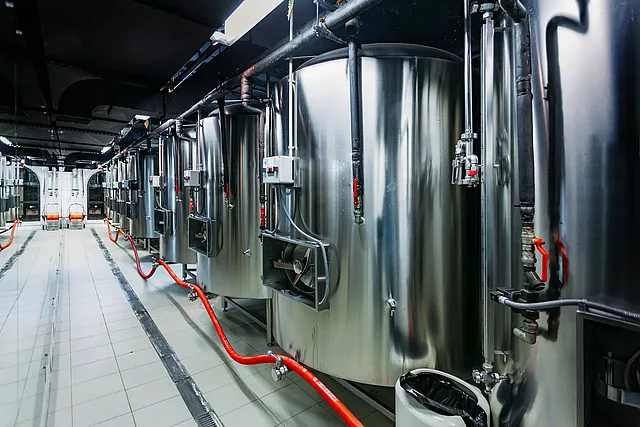
Introduction: Maximizing Efficiency and Capacity in Modern Brewery Cooling
Breweries today face escalating demands: higher production capacity, lower energy consumption, and strict regulatory frameworks governing refrigeration and ammonia volumes. BUCO ice bank silos provide a future-proof response to these challenges. As high-performance industrial chillers and energy-efficient ice storage systems, they unlock substantial operational improvements in brewing water cooling – reducing footprint, stabilizing energy loads, and ensuring long-term compliance. If your goal is to expand production without expanding your plant, BUCO solutions directly address these pressures and enable measurable gains. Request your tailored consultation to quantify the efficiency potential for your facility.

Robert Streif
General Manager
Robert is the managing director of Heat Transfer Technology GmbH in Olching. For the past 27 years, he has specialised in the use of pillow plate heat exchangers in industrial applications.
Why Breweries Upgrade to Ice Bank Silos: Industrial Chillers Redefined
Immediate Benefits: Smaller Footprint, Higher Capacity, Lower Costs
The most powerful advantage of BUCO ice bank technology lies in its use of latent heat from melting ice. This principle allows breweries to reduce conventional brewing water storage volumes by up to 83%, drastically minimizing tank footprint and freeing high-value floor space for production expansion or modernization projects.
Moreover, ice bank silos deliver cost-stable, energy-optimized cooling by shifting refrigeration loads to brew-free periods – without increasing ammonia charge. For breweries navigating regulatory thresholds, this benefit alone can eliminate the need for costly approval processes.
If your facility is planning a capacity increase, BUCO ice bank silos let you scale cooling performance without adding risk or administrative effort.
Contact our engineering team to explore how much capacity your current ammonia system could unlock.
Traditional Practices and Their Limitations
Historically, breweries relied on large stack tanks and single-flow cooling systems. Brew water was chilled with conventional industrial chillers, stored in oversized insulated vessels, and reheated via wort counterflow. These legacy designs:
- consumed valuable space,
- restricted cooling flexibility,
- and required high investment for breweries running multiple brews per day.
In contrast, BUCO ice bank silos replace static storage dependencies with dynamic, energy-buffering ice reserves, enabling continuous process optimization.
Ice bank silos deliver cost-stable, energy-optimized cooling by shifting refrigeration loads to brew-free periods.
Technical Specifications: BUCO Ice Bank Silo System for Brewing Water Cooling
BUCO systems are engineered for industrial reliability and high-performance brewing water cooling. A representative configuration includes:
- Total Cooling Capacity: 25,336 kWh / 24 h
- Ice Storage Capacity: 10,000 kWh
- Refrigeration Technology: NH₃ pumped ammonia system
- Ice Water Temperature: 0.5°C
- Number of Silos: 2
- Tank Diameter: 3,050 mm
- Tank Height: 20.47 m
- Tank Volume: 108 m³ each
- Ice Capacity: 98.9 m³ per tank
- Insulation: 100 mm
This setup allows breweries to store ice during off-peak periods – weekends, nights, and brew-free hours – ensuring efficient direct cooling during active brewing cycles. For breweries seeking predictable cooling performance at high throughput, this architecture delivers unrivaled stability.
This architecture delivers unrivaled stability for breweries seeking predictable cooling performance at high throughput.
Key Benefits of BUCO Ice Bank Refrigeration Systems in Brewery Process Cooling
Optimize Space, Reduce Costs, and Enhance Operational Flexibility
Below is a structured overview of high-value advantages, each directly connected to typical brewery pain points:
- Space Optimization: Ice storage reduces tank volume to one-sixth of conventional systems – ideal for crowded brewhouses and expansion projects.
- Load Shifting & Power Stability: Cooling is produced during low-cost, off-peak periods, reducing grid strain and lowering operational expenses.
- Capacity Gains Without Additional Ammonia: High cooling capacity can be added without increasing NH₃ charge – often eliminating the need for new government permits.
- Integrated Cold & Hot Water Management: Enables modernization of entire brewhouse cooling and heating workflows.
- Flexible Supply for Peak Loads: High melting rates ensure reliable water temperatures, even with rapid brew cycles.
- High-Efficiency, Direct Cooling: Direct heat transfer minimizes losses and accelerates brew water temperature control.
- Hygienic Stainless Steel Construction: Ensures compliance, durability, and long-term safety.
- Reduced Refrigerant Requirements: Lowers environmental impact and simplifies regulatory obligations.
- Minimal Footprint: Compact process heat exchanger designs dramatically reduce installation area.
- Easy Maintenance & Inspection: External evaporators offer quick access and straightforward cleaning.
- Retrofit-Friendly: Ice bank systems integrate seamlessly with existing tanks, geometry, and piping layouts.
- Energy-Efficient Ice Water Production: Supports direct cooling and glycol-based systems.
- Simple, Robust Controls: Plate heat exchangers and standardized components ensure reliability and ease of use.
If your brewery seeks to lower kWh/hl while increasing throughput, BUCO’s solutions provide immediate performance gains. Reach out for a custom ROI evaluation specific to your utility costs and production schedule.
System Modernization: Optimized Hot Gas Defrost and Advanced Technical Controls
Modern brewery refrigeration requires precision – both for temperature control and process continuity. BUCO’s optimized hot gas defrost systems operate at half total refrigeration capacity, minimizing energy consumption. Ultrasonic ice level probes and specialized valve stations ensure consistent – and automated – ice detachment and melting behavior.
The result: maximum uptime, continuous brew water availability, and precise temperature management for all brewing applications.
To learn how these advanced control strategies can fit into your automation environment, schedule a technical discussion with our engineering specialists.
Getting Started: Tailored Brewery Water Cooling Solutions
Every brewery’s process requirements are unique, from brewhouse configuration to refrigeration strategy. BUCO offers customized design, engineering, and integration support, ensuring alignment with modernization goals, sustainability strategies, and production targets.
Start unlocking the benefits of ice bank technology and discover how much capacity, energy, and space your brewery can save.
BUCO’s optimized hot gas defrost systems operate at half total refrigeration capacity, minimizing energy consumption.
Technical Overview: Key Facts for Engineers & Decision-Makers
- Up to 83% less storage volume through ice-based cooling.
- No additional approvals required when increasing performance without raising NH₃ charge.
- Energy-optimized, off-peak cooling reduces demand charges and operational costs.
- Rapid, stable temperature control thanks to high-efficiency direct cooling.
- Stainless steel construction ensures hygiene, lifespan, and compliance.
- Retrofit-ready for existing brewery infrastructure.
- Advanced monitoring & control, including ultrasonic ice level probes, for maximum process reliability.
Rapid, stable temperature control thanks to high-efficiency direct cooling.
Frequently asked questions
Brewery Water Cooling
Ice bank silos offer superior energy efficiency, significant space savings, and stable process cooling for breweries compared to conventional systems. They reduce the footprint of cold water storage tanks by up to 83%, enable load shifting during off-peak periods, and help increase brewing capacity without raising ammonia refrigerant volumes, thus avoiding regulatory issues. This leads to lower operating costs, reliable temperature control, and a strong competitive advantage for modern breweries.
In brewing water cooling, ice bank silos use vertical evaporator plates inside a stainless-steel silo to freeze water into thin layers of ice. During defrost cycles, the ice is released, crushed, and used as a cold storage medium. The system is typically PLC-controlled, providing efficient, automated cooling down to 0.5°C and allowing for flexible batch-free operation that aligns with brewing schedules. Hot gas defrost technology ensures rapid ice release and system readiness for subsequent cycles.
Key specifications include cooling capacity per 24-hour cycle (often ranging from 2,000 to 10,000+ kWh), ice storage volume, refrigerant choice (such as ammonia, freon, or glycol), temperature range (down to 0.5°C for direct cooling), tank material (usually insulated stainless steel), control system (PLC-based), footprint, and retrofitting compatibility with existing tanks. These factors ensure the system meets your production volume, energy-efficiency goals, and technical requirements.
By shifting all or part of the cooling process to off-peak or sud-free times (e.g., nights, weekends), ice bank silos allow breweries to balance electrical load, use energy at lower rates, and reduce overall consumption. Their high-efficiency design minimizes the quantity of refrigerant required, further lowering environmental impact and costs. Direct cooling with ice water produces rapid and precise temperature control, optimizing brewing performance while minimizing waste.
Yes, ice bank silos are designed with modularity and flexibility in mind. They can be adapted to many existing cold water tanks and process heat exchangers used in breweries. Customizable geometry and compact footprints allow for installation in facilities with limited space. Their external evaporator and stainless-steel construction make inspection, cleaning, and compliance easier, which is particularly valuable during modernization or expansion projects.
We have always assimilated engineering science and thermodynamics optimally in the various manufacturing processes.
Thermodynamicists,mechanical engineers and welding engineers define the dimensioning, design and construction of customised heat exchanger panels and systems in materials ranging from mild and austenitic steels through to titanium, and ensure successful distribution of their work worldwide.
In doing so they fall back on production engineering expertise and calculations developed in the course of the past hundred years that are still being continuously optimised in an ongoing process.
In the perception of our customers, the Buco product stands for:
Technical and process-oriented consulting
Thermodynamic efficiency
Quality and longevity


