Milk Cooling on Farms
Advanced, High-Efficiency Solutions for Modern Dairy Operations
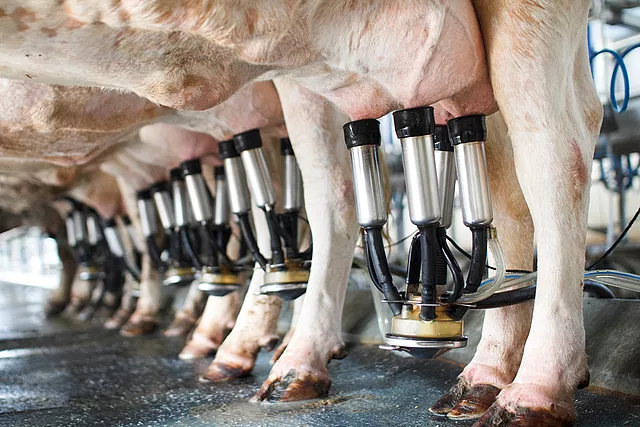
Efficient, hygienic, and energy-optimized milk cooling is one of the fastest ways for dairy owners and managers to protect milk quality, increase profitability, and secure compliance with strict hygiene regulations. The following guide outlines advanced cooling technologies – ice bank tanks, falling film chillers, and plate heat exchangers – that deliver rapid, reliable cooling performance for today’s demanding dairy operations.

Robert Streif
General Manager
Robert is the managing director of Heat Transfer Technology GmbH in Olching. For the past 27 years, he has specialised in the use of pillow plate heat exchangers in industrial applications.
Why Fast Milk Cooling Matters for Milk Quality, Hygiene, and Profitability
Immediate benefits for farm operators
Achieving rapid milk cooling from approximately 32°C to 4°C protects product value, ensures consistent hygiene compliance, and helps maintain strong pricing with processors and buyers.
Fast cooling is essential because even short delays promote bacterial growth and degrade flavor, shelf life, and regulatory compliance. Efficient cooling systems eliminate these risks by stabilizing milk quality from the moment of milking – directly safeguarding your brand reputation and long-term profitability.
Fast Milk Cooling helps maintain strong pricing with processors and buyers.
Modern Milk Cooling Systems Designed for High-Performance Dairy Farms
Selecting the right milk cooling technology can significantly improve energy efficiency, operational reliability, and product quality. The following systems provide scalable, cost-effective solutions for farms of all sizes.
Ice Bank Tanks: Reliable, Off-Peak Energy Cooling for Day-and-Night Operation
Key value for farm management
Ice bank tanks reduce operating costs by producing and storing ice during low-tariff nighttime hours, ensuring abundant cooling capacity during peak milking times without requiring oversized refrigeration equipment.
Ice bank tank systems store ice water inside a robust stainless-steel tank. During milking, the stored ice melts quickly and uniformly, delivering consistent, energy-efficient cooling performance.
Benefits of Ice Bank Tanks
Before reviewing the features, note how these advantages directly reduce risk and operational cost:
- Long-term durability due to all-stainless-steel construction
- Seamless integration with existing storage tanks and layouts
- Lower energy expenditure through off-peak electricity use and moderate refrigeration loads
Falling Film Chillers: Direct, Energy-Saving Milk Cooling with Maximum Heat Transfer
Why falling film chillers matter for high-capacity dairies
These systems offer industry-leading cooling efficiency by distributing near-freezing ice water (as low as 0.5°C) directly across plate heat exchangers. This enables rapid, one-step milk cooling even under heavy flow and peak loading.
Falling film chillers operate with high heat transfer coefficients, ensuring highly stable milk temperatures – without the risk of freezing – while reducing refrigeration requirements.
Benefits of Falling Film Chillers
The following performance advantages translate into improved milk quality and lower operational risk:
- Maximum cooling output for large or high-frequency milking operations
- Easy visual inspection and fast cleaning via open evaporator systems
- Lower refrigerant charge to support safety, sustainability, and regulatory alignment
Plate Heat Exchangers: Fast, Single- or Two-Stage Milk Cooling
Operational advantage for farms
Plate heat exchangers enable flexible cooling strategies that reduce energy usage and optimize cooling speed, making them ideal for both small and large dairy businesses.
Plate Heat Exchanger Applications
To understand how plate heat exchangers fit into modern dairy workflows, consider their two primary configurations:
- Single-stage cooling:
Milk flows directly to the heat exchanger, using ice water from an ice bank tank or falling film chiller for rapid chilling. - Two-stage cooling:
Milk is first cooled with mains or natural cold water, then brought quickly from ~20°C to 2°C–4°C using ice water – minimizing energy usage while securing hygiene compliance.
Falling film chillers operate with high heat transfer coefficients, ensuring highly stable milk temperatures – without the risk of freezing – while reducing refrigeration requirements.
Benefits of Efficient Milk Cooling Technologies for Dairy Profitability and Compliance
Direct value to decision-makers
Advanced milk cooling solutions deliver predictable performance, protect every batch of milk, and reduce total cost of ownership.
Before comparing features, note how these core advantages support your farm’s operational success:
- Significant energy savings and reduced operating expenses
- High milk quality retention, ensuring maximum market value
- Consistent hygiene compliance with strict dairy regulations
- Flexible operation leveraging low-tariff energy periods
- Scalable configurations suitable for any farm size
Advanced milk cooling solutions deliver predictable performance, protect every batch of milk, and reduce total cost of ownership.
Application Example: Cooling 6,000 Liters of Milk Quickly and Safely
Why this matters
Understanding real-world cooling requirements helps farm managers evaluate system performance and capacity planning.
To reduce the temperature of 6,000 liters of milk from 30°C to 4°C, approximately 2,000 kg of ice is required. Advanced ice bank and falling film systems achieve this cooling rapidly and cost-effectively – without risking freezing – ensuring that every batch meets stringent hygiene and processor standards.
Advanced ice bank and falling film systems achieve this cooling rapidly and cost-effectively.
Key Features of BUCO Dairy Cooling Systems
What BUCO solutions deliver from day one
BUCO’s engineered cooling systems offer reliable performance under peak loads, ensuring long-term durability, low maintenance, and predictable operating costs.
Technical Features Supporting High-Efficiency Operations
These features highlight why BUCO systems are favored by dairy engineers and facility managers:
- High peak-load cooling capacity for intensive milking schedules
- CO₂-compatible evaporators for future-ready refrigeration
- Energy-optimized designs for lower lifetime operating costs
- Robust, low-maintenance components engineered for longevity
- Open design for simplified cleaning and inspection
- Adaptability to diverse tank geometries and farm layouts
BUCO’s engineered cooling systems offer reliable performance under peak loads, ensuring long-term durability, low maintenance, and predictable operating costs.
Getting Started: Request a Custom Milk Cooling Solution
Every dairy farm has unique cooling demands based on herd size, milking frequency, energy strategy, and installation constraints.
Contact BUCO today for a personalized proposal that improves efficiency, boosts milk quality, and ensures reliable hygiene compliance.
Technical Overview
Below is a concise summary outlining the engineering essentials of advanced farm-scale milk cooling systems.
- Milk Cooling Systems: Ice bank tanks, falling film chillers, plate heat exchangers
- Cooling Performance: Rapid cooling from ~32°C to 4°C immediately after milking
- Construction Materials: Hygienic, all-stainless-steel design
- Energy Efficiency: Off-peak energy use, low refrigerant volumes, optimized cooling cycles
- Operational Flexibility: Compatible with varied tank designs and all dairy farm sizes
- Compliance: Supports or exceeds stringent milk hygiene regulations
Benefit from the engineering essentials of advanced farm-scale milk cooling systems.
Ready to Improve Milk Quality and Profitability?
Choose high-quality milk cooling systems engineered for efficiency, hygiene, and long-term performance.
Reach out to BUCO now for expert consultation and a tailored milk cooling solution built around your farm’s needs.
Reach out to BUCO now for expert consultation.
Frequently asked questions
Milk Cooling on Farms
Rapid cooling from approximately 32°C down to 4°C is essential to prevent bacterial growth, protect milk hygiene, and maintain optimal product quality. The faster milk reaches safe storage temperature, the higher its market value and the lower the risk of quality downgrades. Consistent rapid cooling also helps farms maintain compliance with strict dairy regulations and processor requirements.
Ice bank tanks store ice during off-peak hours and melt it to provide high cooling capacity during milking. They are ideal for farms looking to reduce energy costs by leveraging low-tariff nighttime electricity.
Falling film chillers deliver very cold ice water (as low as 0.5°C) directly to plate heat exchangers, enabling extremely fast, one-step cooling even at high volumes. They are preferred for large operations requiring maximum cooling performance and minimal refrigerant usage.
Plate heat exchangers increase cooling efficiency by maximizing surface contact between the milk and the cooling medium. They support single-stage cooling using ice water, or two-stage cooling that first pre-cools milk with cold water before final chilling. This reduces energy demand, improves cooling speed, and ensures milk reaches storage temperatures consistently and safely.
Cooling capacity depends on daily milk volume, milking frequency, and desired cooling time. As an example, cooling 6,000 liters of milk from 30°C to 4°C requires roughly 2,000 kg of ice. A dairy engineering analysis typically evaluates tank size, peak flow rate, energy tariffs, and herd expansion plans to recommend the right system. Most farms benefit from scalable solutions that can grow with production demands.
For long-term reliability and compliance, decision-makers should prioritize:
- Stainless-steel construction for durability and hygiene
- High peak-load cooling performance to handle fast milking cycles
- Energy-efficient design optimizing electricity use and refrigerant levels
- Easy cleaning and inspection for simplified maintenance
- Compatibility with existing tanks and farm layouts
A professional assessment ensures the system meets regulatory standards, fits existing infrastructure, and supports future scalability.
We have always assimilated engineering science and thermodynamics optimally in the various manufacturing processes.
Thermodynamicists,mechanical engineers and welding engineers define the dimensioning, design and construction of customised heat exchanger panels and systems in materials ranging from mild and austenitic steels through to titanium, and ensure successful distribution of their work worldwide.
In doing so they fall back on production engineering expertise and calculations developed in the course of the past hundred years that are still being continuously optimised in an ongoing process.
In the perception of our customers, the Buco product stands for:
Technical and process-oriented consulting
Thermodynamic efficiency
Quality and longevity


